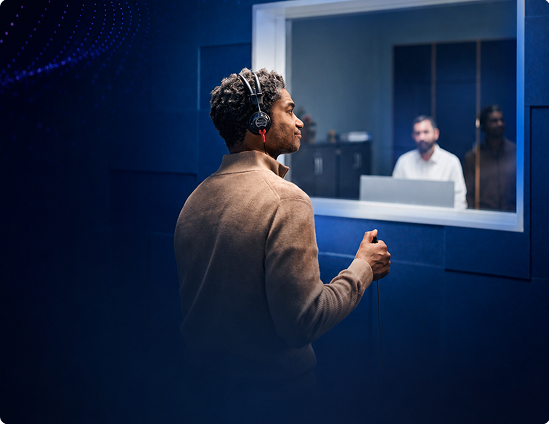
In this guide, you’ll learn what AI hearing aids are, how they work, and how they help tackle the biggest challenge for people with hearing loss: hearing in noise. Explore the technology behind AI hearing aids and how it brings clarity in noisy environments. Discover which AI hearing aids are best for you in 2026.

Clinical Review
The content on this page has been reviewed and approved by Laurel A. Christensen | Ph.D. Hearing Science and Audiology | Chief Audiology Officer.

Woman and man shown in overlapping portrait frames against a soft neutral background

What are AI Hearing aids?

AI has been a part of hearing aids for several years, but the most modern AI hearing aids use the latest generation of intelligent hearing technology. They combine fast rule‑based processing with adaptive machine‑learning models, such as Deep Neural Networks (DNNs), to analyse your surroundings in real time and automatically adjust the appropriate hearing‑aid features to each situation. This helps bring clarity to quiet and noisy environments alike, reducing the overall listening effort for hearing‑aid users. They build on traditional digital hearing aids rather than replacing them. Think of them as smart hearing aids with an AI co‑pilot.

 
  • Technology

    How do AI Hearing aids work?

    AI hearing aids (also called intelligent hearing aids) are advanced digital hearing aids with extra processing power and software that can:

  • icon

    Analyse the sound environment

    Continuously analyse the sound scene like, speech, noise, wind or traffic.

  • icon

    Optimise listening experiences

    Classify situations like a quiet conversation, a busy restaurant or a conversation in the car, and adjust automatically for an optimal listening experience.

  • icon

    Provide focused listening

    Help users lock onto what they want to hear by tightening focus around the sound source when directional microphones are combined with the AI.

  • icon

    Enhance speech in noise

    Bring speech forward while keeping background noise sounding natural.

  • icon

    Offer greater control

    Be controlled via a smartphone app or in‑clinic fine‑tuning.

What technology is used in AI hearing aids?

The most effective AI hearing aids typically combine three elements.

The result of all three technologies working together is more natural sound and smoother transitions when you move from, for instance, a quiet setting to a noisy street or restaurant.

Explore AI technology

icon

Environmental classification and automatic adaptation
AI hearing aids use a classification technology that constantly scans and analyses the sound scene in real time (e.g. a quiet room, a restaurant or traffic), measuring aspects such as loudness, modulation and spectral content.
Based on this, it automatically categorises the environment and then selects or blends the right settings (directionality, noise reduction, gain) so the user gets clearer, more comfortable sound without manually changing programmes.

icon

4-mic beamforming technology
Four microphones work together to create a directional “beam” that focuses on sounds coming from where the listener is looking (typically in front) while reducing noise from other directions.

icon

A powerful on‑board DNN chip 
A DNN, or deep neural network chip, is a type of AI model that can be trained on millions of speech-in-noise situations to recognise patterns and learn how speech and noise typically differ across time and frequencies.
The DNN separates speech from background noise in real time, enhancing the parts of the signal it identifies as speech and keeping background sounds at a more natural, subdued level. This improves speech clarity and reduces listening effort.

Key benefits of AI hearing aids

While performance depends on brand, style, form factor, fitting quality and your type of hearing loss,
AI hearing aids are generally designed to deliver:

icon

Better speech understanding in noise

DNN-based noise management can more precisely identify speech versus background noise, so the aid can reduce unwanted sounds while keeping speech clear.

Directional microphone systems can automatically focus on the main speaker (e.g. in front of you) while softening chatter from behind or beside you.

icon

Reduced listening effort and fatigue

When the hearing aids handle more of the ‘heavy lifting’ of separating sound, many users report less mental strain in challenging environments like restaurants, meetings and family gatherings.

icon

More personalisation and comfort

Smartphone apps that work with AI hearing aids add an extra layer of control, giving users the ability to adjust settings or turn features on and off – for example, amplifying the DNN effect or choosing to turn it off completely.

The comfort of an AI hearing aid, as with non‑AI hearing aids, depends on multiple factors, such as brand, style, and fitting.

icon

Smart connectivity and lifestyle features

Depending on brand, form factor and style, AI hearing aids, like traditional hearing aids, can:

  • Stream music and TV audio directly via Bluetooth® LE Audio.
  • Connect to Auracast™ Broadcast Audio.
  • Make and receive hands‑free phone calls through your phone’s Bluetooth.

FAQs for AI hearing aids

AI has been a part of hearing aids for several years, but the most modern AI hearing aids use the latest generation of intelligent hearing technology. They combine fast rule‑based processing with adaptive machine-learning models, such as Deep Neural Networks (DNNs), to analyse your surroundings in real time and automatically adjust the appropriate hearing-aid features to each situation. This helps bring clarity to quiet and noisy environments alike, reducing the overall listening effort for hearing-aid users. They build on traditional digital hearing aids rather than replacing them. Think of them as smart hearing aids with an AI co‑pilot.   

AI hearing aids (also called intelligent hearing aids) are advanced digital hearing aids with extra processing power and software that can:

  • Continuously analyse the sound scene, such as speech, noise, wind, or traffic.
  • Classify situations like a quiet conversation, a busy restaurant, or a conversation in the car, and adjust automatically for an optimal listening experience.
  • Help users lock onto what they want to hear by tightening focus around the sound source when directional microphones are combined with AI.
  • Bring speech forward while keeping background noise sounding natural.
  • Be controlled via a smartphone app or through in-clinic fine-tuning.

The most effective AI hearing aids typically combine three elements:

  1. Environmental classification and automatic adaptation
    • A classification technology that constantly scans and analyses the sound scene in real time (e.g. a quiet room, a restaurant or traffic), measuring aspects such as loudness, modulation and spectral content.
    • Based on this, it automatically categorises the environment and then selects or blends the right settings (directionality, noise reduction, gain) so the user gets clearer, more comfortable sound without manually changing programmes.
  2. 4-mic beamforming technology
    • Four microphones work together to create a directional “beam”.
    • Focuses on sounds coming from where the listener is looking (typically in front) while reducing noise from other directions.
  3. A powerful on-board DNN chip
    • A DNN, or deep neural network chip, is a type of AI model that can be trained on millions of speech-in-noise situations to recognise patterns and learn how speech and noise typically differ across time and frequencies.
    • The DNN separates speech from background noise in real time, enhancing the parts of the signal it identifies as speech and keeping background sounds at a more natural, subdued level. This improves speech clarity and reduces listening effort.

The result of all three technologies working together is more natural sound and smoother transitions when you move from, for instance, a quiet setting to a noisy street or restaurant.

While performance depends on brand, style, form factor, fitting quality and your type of hearing loss, AI hearing aids are generally designed to deliver:

  1. Better speech understanding in noise
    • DNN-based noise management can more precisely identify speech versus background noise, so the aid can reduce unwanted sounds while keeping speech clear.
    • Directional microphone systems can automatically focus on the main speaker (e.g. in front of you) while softening clatter from behind or beside you.
  2. Reduced listening effort and fatigue
    • When the hearing aids handle more of the ‘heavy lifting’ of separating sound, many users report less mental strain in challenging environments like restaurants, meetings, and family gatherings.
  3. More personalisation and comfort
    • Smartphone apps that work with AI hearing aids add an extra layer of control, giving users the ability to adjust settings or turn features on and off – for example, amplifying the DNN effect or choosing to turn it off completely.
    • The comfort of an AI hearing aid, as with non-AI hearing aids, depends on multiple factors, such as brand, style, and fitting.
  4. Smart connectivity and lifestyle features

    Depending on brand, form factor, and style, AI hearing aids, like traditional hearing aids, can:

    • Stream music and TV audio directly via Bluetooth® LE Audio.
    • Connect to Auracast™ Broadcast Audio.
    • Make and receive hands-free phone calls through your phone’s Bluetooth.
  5. Future-ready software updates
    • Traditional and AI hearing aids alike can receive firmware or software updates that refine sound-processing algorithms or add new features over time.

Regular hearing aids without AI have fewer adaptive features and rely more on manual setting adjustments and programme changes.

Hearing aids with AI use advanced technology, such as machine learning and other adaptive features, to adjust seamlessly to the sound environment, delivering superior speech clarity and an improved listening experience, especially in noise.

Both types, depending on brand, style, form factor and model:

  • Are medical devices designed to treat hearing loss.
  • Use microphones, a digital processor and a receiver to amplify sound.
  • May include extra features, such as Bluetooth and Auracast™ compatibility.
  • Should be fitted and fine-tuned by a hearing care professional for best results.

AI hearing aids add:

  • Improved speech intelligibility and clarity.
  • A more natural hearing experience, especially in noise.
  • Fewer manual adjustments to settings.

Most current AI hearing aids use advanced machine-learning technologies such as:

  • Deep neural networks (DNNs) trained on large sets of speech and noise recordings to help separate speech from background sounds.
  • Environmental classifiers, also based on machine learning, that recognise different listening situations (for example, quiet, speech in noise, music or traffic) and automatically select or blend the best settings for that scene.

However, “AI” is sometimes used broadly in marketing. The key is whether the hearing aid actually adapts based on data and can perform complex sound analysis beyond simple, pre-set programmes.

For many people, particularly in complex listening situations, AI hearing aids can offer:

  • Better speech clarity in background noise.
  • Fewer manual adjustments (less button-pushing).
  • A more comfortable listening experience.

But ‘better’ depends on:

  • The severity and pattern of your hearing loss.
  • How well the devices are fitted and programmed.
  • The styles, models and features you value most.

A thorough evaluation with a hearing care professional is the best way to compare options for your individual needs.

AI hearing aids may be a good match if you:

  • Struggle most with speech clarity and hearing in noisy environments like restaurants, meetings or family events.
  • Want devices that adjust automatically rather than manually switching programmes.
  • Have issues with listening fatigue and want to reduce listening effort.

Clinical review required: A hearing assessment and professional consultation are essential to determine whether AI hearing aids are suitable for your type and degree of hearing loss, as not all hearing aid styles and form factors can support AI technology.

Many users notice the biggest improvement in busy social situations compared with older technology. AI hearing aids are specifically designed to improve hearing in noise by separating voices from background sound and focusing microphones on the person you’re listening to. This can help you hear better in noisy places like restaurants, cafés and family gatherings.

Speech understanding in noise is improved by:

  • Detecting and prioritising speech signals.
  • Applying stronger, more targeted noise reduction when background noise rises.
  • Adjusting microphone directionality to focus on the speaker.

Yes. Instead of simply making all sounds louder, AI hearing aids try to:

  • Emphasise speech frequencies.
  • Soften non-speech noise like clattering dishes or traffic.
  • Preserve more natural sound quality by shaping amplification rather than just increasing volume.

Yes, AI hearing aids can help reduce listening effort and fatigue, especially in noisy or complex environments compared with traditional devices. They make it easier to focus on a target sound, even when there is heavy background noise. For many hearing-aid users, this lower listening effort throughout the day means they feel less mentally tired and can stay engaged in conversations for longer.

Most devices allow you to:

  • Switch between automatic AI-driven modes and simple manual programmes.
  • Adjust the strength of features like noise reduction, directional focus or environmental adaptation in the app.

Your hearing care professional can help find a setup that is right for you.

No. AI hearing aids will still amplify sound and apply automatic features without a smartphone.

A compatible smartphone is needed if you want to:

  • Use the full app for personalisation and remote support.
  • Stream calls, music or TV audio directly to your ears.
  • Receive firmware updates.

Compatibility varies by brand, but most modern AI hearing aids support a range of recent iPhone and Android devices. Your hearing care professional or the manufacturer’s compatibility list is the best source of up-to-date information.

For a comprehensive overview of smartphone compatible hearing aids, please visit our compatibility page.

Features can vary by brand, but the ReSound Smart 3D app gives you direct access to features like:

  • Volume, EQ and programme control.
  • Noise reduction (DNN) strength.
  • Save settings and create preset profiles for frequently visited locations.
  • Remote assistance from your hearing care professional, including adjustments sent to your devices without an in-person visit.
  • Tinnitus management.
  • A hearing aid locator for finding lost hearing aids.

Learn more about the hearing aid app.

Most AI hearing aids in the premium segment support:

  • Direct streaming of phone calls and audio from compatible phones.
  • Streaming from TVs or media devices via dedicated TV transmitters or hubs, depending on the brand.

Some models allow you to use your hearing aids as a hands free headset for your phone’s voice assistant, so you hear responses directly in your ears and can control calls or media with voice commands.

Comfort depends on the physical design and fit rather than the AI itself. As with other hearing aids, modern AI hearing aids are available in lightweight, ergonomic styles designed for full day wear, provided they are properly fitted to your ear and degree of hearing loss.

Yes, AI processing is available in several styles and form factors, with ReSound offering the world’s smallest rechargeable receiver-in-ear (RIE) AI-powered hearing aid, along with ultra discreet behind-the-ear (BTE) styles.

AI processing requires more computing power than basic amplification, which can impact battery life. Manufacturers balance this with power-efficient chips and/or larger rechargeable batteries. Real-world battery life depends on:

  • How much you stream audio.
  • Volume levels and environmental complexity.
  • Battery size and age.
  • The efficiency of the AI.

Even so, some AI hearing aids have been shown to deliver up to 24 hours of battery life, even while streaming throughout the day.

AI hearing aids can operate without an app. You can control volume and programmes using the buttons on the instruments and rely on the settings configured by your hearing care professional. Companion apps simply add another layer of control and easier access to settings for users who feel comfortable with the technology.

Our ReSound Smart 3D app is designed to be ultra intuitive and accessible, making navigation as easy as possible.

Yes, they will continue to operate with the last settings programmed in the clinic. You will temporarily lose app based controls and streaming features until you reconnect with a replacement phone.

AI hearing aids continuously pick up sound and must ‘listen’ in real time so they can amplify it. This is true of all hearing aids. However, consumer AI hearing aids process sound on the device and do not store full audio recordings.

If maintained properly, hearing aids with AI, like any other device, can last for many years.

AI hearing aids can receive firmware updates that improve stability, sound processing and overall performance, as well as fix bugs. Depending on the brand, these updates may be installed through a smartphone app or carried out in the clinic by a hearing care professional.

Yes, in some systems, updates can enhance performance, add features, or optimise sound processing without changing the hardware. However, there are limits to what software alone can achieve. Very old models may not support newer algorithms, some hearing aid models do not support over the air updates, and firmware upgrades can only refine existing features – they cannot add hardware dependent functions such as extra microphones.

Additional complexity and connectivity can introduce:

  • More variables, such as phone compatibility, app versions and Bluetooth issues.
  • An occasional need for software updates or resets.

Working closely with a hearing care professional, keeping firmware up to date and following maintenance guidance will help keep your hearing aids reliable day to day.

If your phone or operating system is no longer supported:

  • The hearing aids will still function with their last programmed settings.
  • You may lose some app controls or streaming capabilities until you upgrade to a compatible device.

Your clinician can still adjust the hearing aids directly in the clinic.

Absolutely. AI improves automatic adjustments, but accurate diagnosis, fitting, ear mould selection and counselling all require a trained professional. The best results come from combining expert fitting with AI powered technology.

The ReSound Sensia family of hearing aids has been externally tested and proven by world renowned institutions to deliver the best hearing in noise experience compared with its closest competitor, making these AI hearing aids an excellent choice for noisy environments.

Many people search for ‘best AI hearing aids’ or ‘best AI hearing aids 2026’ expecting a single winner. In reality, ‘best’ depends on your individual audiological profile, hearing needs and preferences – whether you value simplicity or advanced app control and features.

When comparing AI hearing aids, you should consider:

  1. Hearing-in-noise performance
  2. Comfort and style options
  3. Battery life and type
  4. Connectivity and app accessibility
  5. Clinical support

Because AI hearing aids are complex medical devices, independent reviews, trial periods and in-clinic demos are more useful than rankings alone. There is no single ‘best’ model for everyone. The best AI hearing aids for you will depend on your hearing test results, ear shape, fitting, lifestyle, technology preferences and the support offered by your local clinic. A personalised evaluation is the safest and most reliable way to choose.

Recommended next steps

If you suspect hearing loss or are curious whether AI hearing aids could help you, book a comprehensive hearing assessment with a qualified hearing care professional. Bring a list of real‑life situations that are hardest for you, e.g. an open‑plan office or a restaurant, and ask to compare different technology levels, including AI options, so you can discuss which features match your priorities.

Person wearing hearing aids stretching in a bright indoor space

Want to try...

our latest AI hearing aid?

Person taking a hearing test with a hearing care professional

Curious about your hearing?

Take our free online hearing test to get a quick indication of how well you hear in everyday situations.